The job
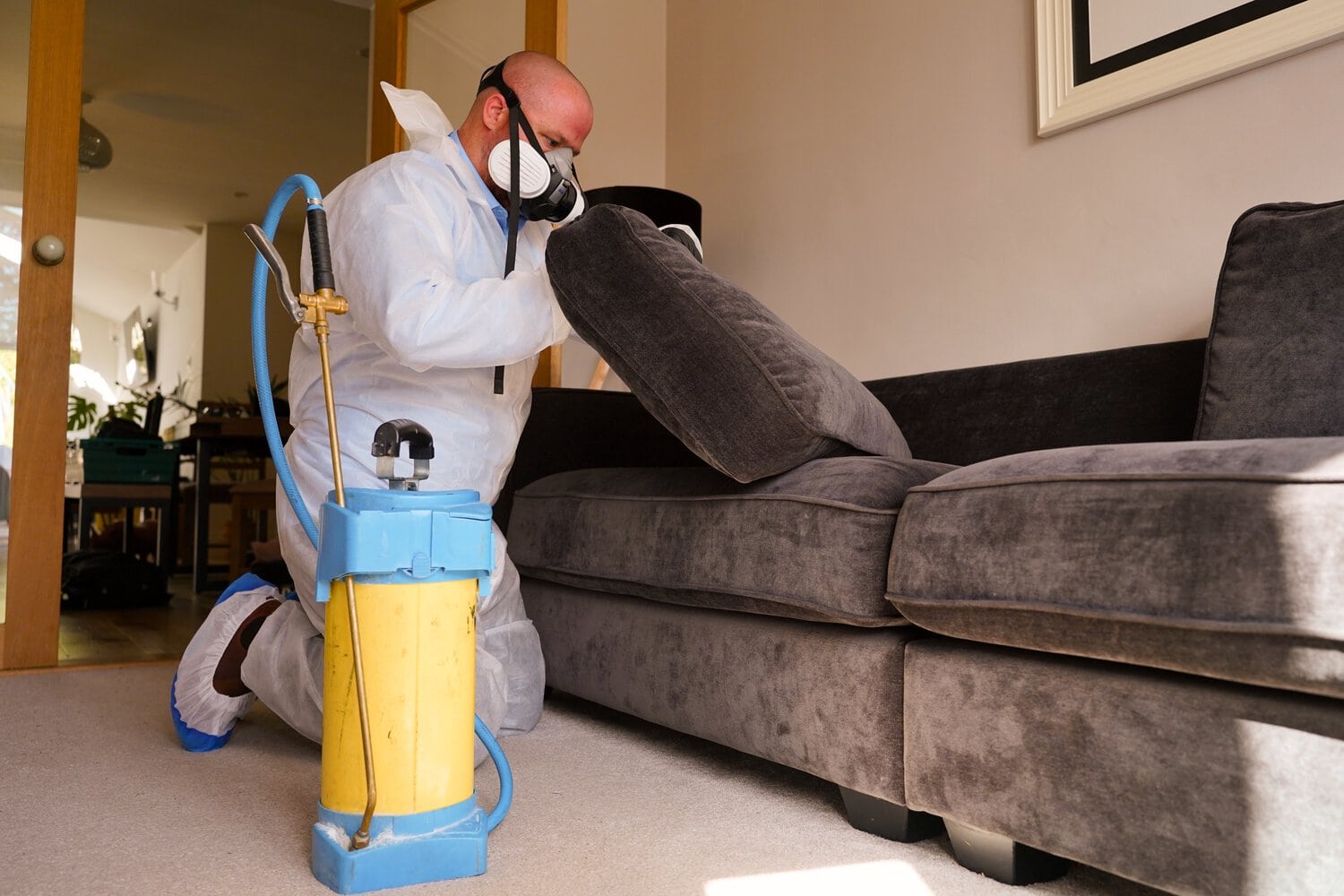
We have been carrying out ongoing pest management at a residential block in the E14 area of East London. The building has three floors of flats, shared walkways and stairwells, and a communal laundry room used by all residents.
Mapping the infestation
Our first task was to find out exactly where the bed bugs were. After inspecting the affected homes and the flats around them, we mapped and isolated the infestation to a single vertical stack on one side of the building. Four to five flats within that section had a severe infestation, while the rest of the building was not affected.
Those flats were placed on an intensive treatment programme.
Progress at the follow up visits
At each follow up we carried out full checks of every mattress, bed frame and item of soft furnishing in the affected flats. Compared with our baseline assessment three weeks earlier, bed bug activity had dropped significantly. Treatment inside the flats is progressing as expected.
Why the communal areas became the priority
With numbers falling inside the flats, the main remaining risk to the wider building was what we call passive transit. Residents carry clothing, bedding and other textiles from their flats, along the hallways and down the stairs to the laundry room. Along the way, adult bed bugs or nymphs can drop onto carpets, skirting boards and fixtures. A resident from a clear flat can then pick them up without knowing and carry them home.
At the request of the scheme coordinator, we extended our work to cover the communal areas on all three floors: walkways, stairwells and the shared laundry.
How we are treating the shared areas
We are applying professional residual insecticides and desiccant treatments along the routes bed bugs are most likely to travel and hide:
- floor and wall junctions and skirting boards
- door frames and architraves
- handrail mountings
- the edges of stairwells and walkways
- in the laundry room, behind and beneath the machines, along the perimeter walls and around the folding areas
Every resident was notified before treatment, with clear guidance on how long to stay out during application and how long to wait before going back in.
The laundry routine we recommended
Treatment alone will not stop bed bugs travelling through a building if infested laundry is carried through it openly. We recommended that site management put a simple routine in place:
- Bag all clothing, bedding and textiles inside the flat, in heavy duty sealed plastic bags or dissolvable laundry bags.
- No loose items or open laundry baskets in the walkways.
- Keep bags sealed until they are opened directly at the washing machine or dryer, then tie off the used bags and put them straight in the outside bins.
- Wash or tumble dry at 60°C or higher for at least 30 minutes. That kills bed bugs at every life stage, including eggs.
- Carry clean laundry home in fresh, unused sealed bags.
We also advised daily vacuuming of corridors and the laundry room with HEPA filter vacuums, non porous folding surfaces such as stainless steel or hard plastic, and clear notices in the communal areas so every resident knows the routine.
Why bed bugs move up and down a building
Bed bugs cannot fly or jump, but they move well over short distances through the structure of a building. In blocks of flats they often follow routes that already link homes vertically, such as service risers, pipework and gaps around pipes and behind skirting. That is why an infestation in one flat often turns up next in the flat above or below rather than next door. They also travel on people, luggage, furniture and laundry, which is exactly why shared areas need attention as well as the flats themselves.
If you live in or manage a block of flats
- Report bed bugs to your landlord or managing agent early. Treating one flat on its own often pushes the problem to the neighbours.
- Avoid shop bought sprays and foggers, which can scatter bed bugs into walls and nearby flats.
- Bag laundry before it leaves the flat and wash or dry it hot.
- Check second hand furniture and luggage before bringing it inside.
- If you manage a building, treat communal routes and laundry rooms as part of the job, not an afterthought.
We work across East London and also handle bird problems, as in our Wembley pigeon netting case study.
If you think you have bed bugs in your flat, or you manage a block where residents are reporting bites, find out more about our bed bug treatment service, or call our team on 01702 520 060 or 01708 458 416.